By Dr. Shiv Kumar Goel, MD – Internal Medicine, Functional & Aesthetic Medicine
Functional medicine is a systems-based, patient-centered model that aims to identify and treat the root causes of disease by looking at how genetics, lifestyle, and environment interact across the whole body.
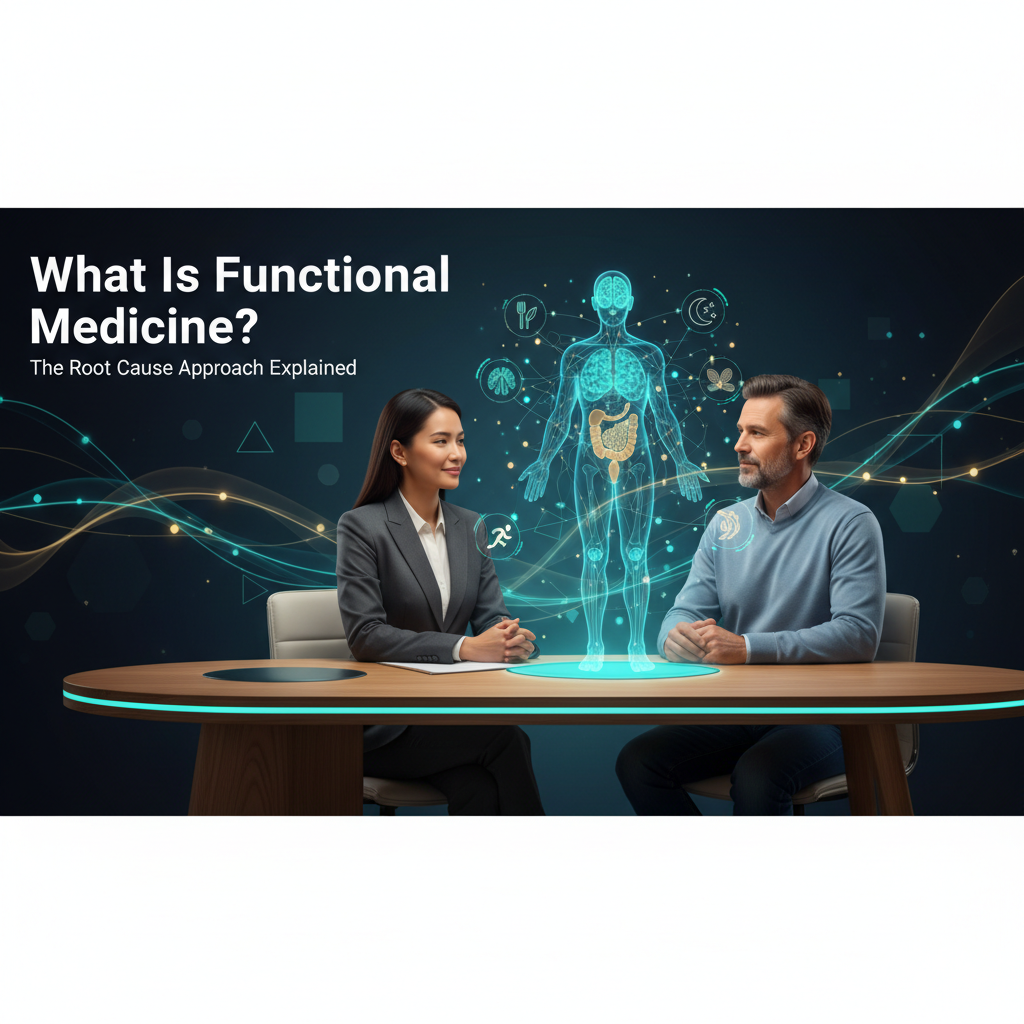
What Is Functional Medicine?
Functional medicine is a personalized, patient-centered, science-informed approach that focuses on why illness happens, not just what to prescribe for a diagnosis. It is often described as the clinical application of systems biology—looking at how different organs and networks interact, rather than viewing each symptom or organ in isolation.
Key ideas include:
- The body is an interconnected network, not separate parts.
- Chronic disease usually reflects underlying dysfunction in systems such as gut, immune, endocrine, or mitochondrial pathways.
- Genetics, lifestyle (sleep, stress, nutrition, movement), environment, and social context all shape how those systems function.
The goal is to restore optimal function and resilience, not just to keep lab numbers “normal.”
The Root Cause Approach Explained
Instead of asking “What drug matches this disease?”, functional medicine asks “Why did this person develop this problem at this time?”
This root-cause framing usually involves:
- Detailed history and mapping: A deep dive into timeline, triggers, travel, toxins, trauma, diet, sleep, stress, infections, and exposures, often organized with structured tools like a systems biology matrix.
- Systems-focused assessment: Looking for patterns of imbalance—such as chronic inflammation, insulin resistance, gut dysbiosis, HPA-axis stress responses, or hormone disruption—rather than isolated findings.
- Personalized plan: Interventions tailored to the individual—including food, movement, sleep, stress work, microbiome support, targeted supplements, and medications where appropriate—aimed at correcting upstream dysfunction.
Done well, the root-cause lens does not reject conventional medicine; it adds more context to why disease shows up and how to influence its trajectory. Check out overview of how systems biology underpins the functional medicine model for more in-depth detail.
How Functional Medicine Differs From Conventional Care
Conventional medicine excels at acute care—heart attacks, trauma, infections, surgery, and lifesaving interventions—but often struggles with slow, multifactorial chronic problems. Functional medicine is designed specifically around those chronic, complex cases.
Common distinctions:
- Visit structure: Longer visits, more listening, and deep history-taking versus short, problem-oriented visits.
- Focus: “What is the diagnosis and guideline-based treatment?” versus “What network of imbalances is driving this person’s symptoms, and how do we unwind it?”
- Tools: More emphasis on lifestyle medicine, nutrition, stress and sleep interventions, and sometimes advanced or specialty lab testing, alongside standard diagnostics.
- Patient role: Patients are active partners in behavior change and ongoing experimentation, not passive recipients of prescriptions.
For many people with overlapping issues (fatigue, gut problems, autoimmunity, mood changes, metabolic syndrome), this whole-person, iterative approach can clarify complex patterns that do not fit neatly into a single specialty box.
Benefits—and the Criticisms
Potential Benefits
Supporters of functional medicine highlight several advantages:
- Root-cause identification: Moving beyond symptom suppression to address triggers such as food intolerances, chronic stress, environmental exposures, and microbiome imbalances.
- Personalized, holistic care: Plans that integrate physical, mental, and emotional health, tailored to genetics, history, and lifestyle.
- Systems thinking: Use of systems biology frameworks to guide decisions in complex, multi-symptom cases.
Early experiences from large centers suggest this model can support better decision-making in chronic, complex patients, though more rigorous outcome data are still emerging.
Common Criticisms
Critics raise important concerns that any responsible functional medicine practice must take seriously:
- Evidence gaps: There are relatively few randomized, controlled trials comparing full functional medicine programs to standard care, and some published claims have been questioned.
- Over-testing and over-supplementation: Some clinics order large panels of unvalidated tests and recommend expensive supplements with limited evidence.
- Vague terminology: Phrases like “adrenal fatigue” or “toxins” can be used imprecisely, blurring the line between science-based care and alternative medicine marketing.
Balanced reviews stress that functional medicine should remain grounded in evidence, use validated tests when possible, be transparent about what is known versus emerging, and avoid untestable or exaggerated claims.
When Functional Medicine May Be Helpful for You
A root-cause, systems-based approach can be particularly useful if you:
- Have chronic, unexplained symptoms (fatigue, brain fog, IBS, chronic pain) despite “normal” standard workups.
- Live with multi-system issues (gut, hormones, mood, immunity) that do not respond well to single-drug approaches.
- Want to focus on lifestyle, environment, and proactive prevention alongside medications, not instead of them.
The most productive stance is not “functional vs conventional,” but “how can both be integrated?”—using acute-care strengths of mainstream medicine together with the root-cause, lifestyle-rich lens of functional medicine.
“If you are ready to explore a root-cause, systems-based approach to your health, schedule a functional medicine consultation with Dr. Shiv Kumar Goel at Prime Vitality Total Wellness and Medical Spa in San Antonio.” →https://www.primevitalitycare.com/book-a-tour/
You can also explore our related services:
- Root-cause functional medicine services
- Microbiome testing & gut health
- Peptide & hormone optimization programs
Author bio:
Dr. Shiv Kumar Goel is a board-certified internal medicine physician and founder of Prime Vitality Total Wellness and Medical Spa in San Antonio, Texas. His work blends functional medicine, microbiome science, circadian rhythm optimization, and advanced regenerative therapies to address the root causes of chronic disease and accelerated aging.(see the generated image above) Through his writing and clinical practice, Dr. Goel explores how modern systems biology, Eastern wisdom, and AI-powered analytics can empower patients to become active co-creators of their long-term health and vitality.(see the generated image above